Lesson Twelve
Dialogue twelve: Ladies visiting a newborn
L: aasalaam aláykUm! mUbaarák sha! staaso kara halúk shiway day. Peace be on you! Congratulations! A male child has come in your house. | اسلام عليکم! مُبارک شه! ستاسو کره هلک شوے دے. |
H: khUdáay de óobakhkha. khosháala ose May God forgive you. Be happy! | خُدائ دې وبخښه. خوشحاله اوسې! |
L: kakáy kum day? Where is the boy? | ککے کُوم دے؟ |
H: oodú day. He's asleep. | اُودۀ دے. |
NOTE:
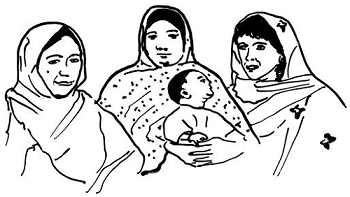
Much tradition surrounds the birth of sons. (This dialogue is just the start of your investigation into this aspect of the culture.) Congratulations are due to all in the household. Observe that the conversation above ended with an excuse to stop you from seeing the newborn. This is to prevent the 'evil eye’. If you are allowed to see him, then a conversation similar to the one below may take place. The first statement (below) is accompanied with a spitting of air rather like spitting an imaginary orange pip.
L: maashaaláa! Der khkÚlay maashóom day. Thanks be to God! He's a pretty boy. | ماشاءالله! ډېر ښُکلے ماشُوم دے. |
H: khUdaay de looy kRee! May God grow him up! | خُدائ دې لوئ کړى! |
L: taaso kum yo noom khwakh kuRay day? What name have you chosen for him? | تاسو کُوم يو نُوم خوښ کړے دے؟ |
H: laa yo noom mU hum nu day khwakh kuRay, kho kúshar tru ye wăr-ta sa'ad waayee. We haven't even chosen a name for him yet, but his youngest uncle calls him Saad. | لا يو نُوم مو هم نۀ دے خوښ کړے، خو کشر ترۀ يې ورته سعد وائى. |
L: mor ye tsunga da? How is his mother? | مور یې ځنګه ده؟ |
H: kha da. She's fine. | ښه ده. |
A few rupees are put in the infant’s hand without comment, leading to the following dialogue:
H: na, daa Dere dee, daa mu-kawa! No, it's too much, don't do it! | نه، دا ډېرې دى، دا مۀ کوه! |
L: staa pu ku tsu dee? daa kho zmaa aw du saad pu menz ke maamilá da. What is it to you? This is an issue between me and Saad. | ستا پکښې څۀ دى؟ دا خو زما او د سعد په مينځ کښې معامله ده. |
H: oogora, haghú kho payse waakhuste! Look, he took the money! | وګوره، هغۀ خو پیسې واخستې! |
👆 See if you can understand this joke without looking at the English. Then press the button to check your comprehension.
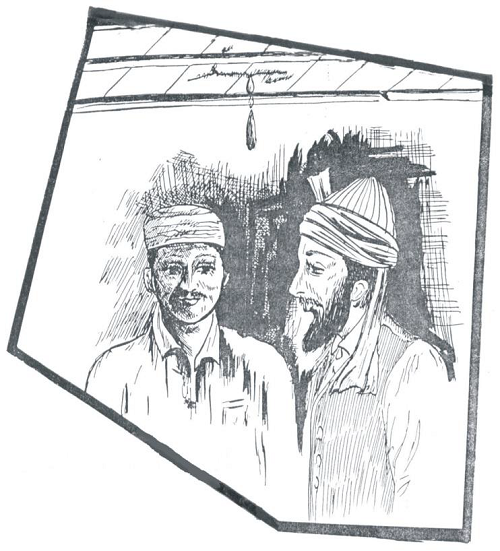
Renting a house
L: khwaa-U-shaa ke du karaaya koroona shta? Are there any houses for rent around here? | خواؤشا کښې د کرايه کورونه شته؟ |
H: aw, dălta yo kor shta. Yes, one house is here. | او، دلته يو کور شته. |
L: daa kor staaso day? Is this house yours? | دا کور ستاسو دے؟ |
H: na, zu tsokeedáar yum. No, I am a watchman. | نه، زۀ څوکيدار يم. |
L: daa kor khaalee day? Is this house empty? | دا کور خالى دے؟ |
H: aw, khaalee day. Yes, it's empty. | او، خالی دے. |
L: oobú pu ke shta? Does it have water? | اوبۀ په کښې شته؟ |
H: aw, khpul koohay pu ke day. Yes, it has its own well. | او، خپل کُوهے په کښې دے. |
L: tso kamre pu ke dee? How many rooms are in it? | څو کمرې په کښې دى؟ |
H: peenzu kamre aw dwa ghUsUlkhaane dee pu ke. It has five rooms and two bathrooms in it. | پينځۀ کمرې او دوه غُسلخانې دى په کښې. |
L: baawarchee khaana tsunga da? How's the kitchen? | باورچى خانه څنګه ده؟ |
H: raaza, óogora! Come and look at it! | راځه، وګوره! |
L: kor kho khu day, kho karaaya tsoomra da? The house is good, but how much is the rent? | کور خو ښۀ دے، خو کرايه څومره ده؟ |
H: du myaashte tsalwekht zara roopúy dee. Forty thousand rupees a month. | د مياشتې څلوېښت زره روپۍ دى. |
L: daa Day graan day. It is very expensive! | دا ډېر ګران دے. |
H: du kor maalík sara khabure óoka. Talk with the landlord about it. | د کور مالِک سره خبرې وکه. |
L: du haghú du Telifóon nambúr tsu day? What is his telephone number? | د هغۀ د ټېلفون نمبر څۀ دے؟ |
H: du haghú de Telifóon nambúr daa day. This is his telephone number. | د هغۀ د ټېلفون نمبر دا دے. |
Pronunciation drill
- Illustrating ور - wr
| haghá me wror day. | He is my brother. | هغه مې ورور دے. |
| haghá me wraarú day. | He is my nephew. | هغه مې ورارۀ دے. |
| wroosto byaa ráasha | Come later. | وروستو بيا راشه. |
| ooswruz da. | It is daytime now. | اوس ورځ ده. |
| wrijze pakhé dee. | The rice is cooked. | وريژې پخې دى. |
- Illustrating ش - sh
| shpug peeshogáane dălta shta. | There are six cats here. | شپږ پيشوګانې دلته شته. |
| shpáaRus shpe hálta páate shoo. | We stayed sixteen nights here. | شپاړس شپې هلته پاتې شُو. |
| shpoonkée du shpe pu sahrá ke páate shwul. | The shepherds spent the night in the desert. | شپُونکى د شپې په صحرا کښې پاتې شول. |
NOTE:
👆 How is your pronunciation going? Try recording your voice in the blanks in one of your practice sessions. Then listen to how you sound speaking Pukhto. You may find it discouraging to do this, but it should be a stimulus to go over the sounds at the start of the book all over again. Keep encouraging your helper to correct you. For words you continue to mispronounce, make your own drills.
Twelve intransitive verbs in the present tense
- اودرېدل - oodredúl (to stop, stand, wait)
| bus dălta oodrégee? | Does the bus stop here? | بس دلته ودرېږى؟ |
| aw, hăra ginTa pas dălta odrégee. | Yes it stops here after every hour. | او، هره ګنټه پس دلته ودرېږى. |
- ګرځېدل - gurzedul (to walk, go around)
| tu hăr sahár chărta gúrze? | Where do you walk every morning? | تۀ هر سحر چرته ګرځې؟ |
| zu hăr sahár pu khaar ke gúrzum. | I go for a walk in the city every morning. | زۀ هر سحر په ښار کښې ګرځم. |
| zmaa gaRúy nun nu gurzee. | My watch is not going today. | زما ګړۍ نن نۀ ګرځى. |
| nun gaaNúy gurzee? | Is the sugar press running today? | نن ګاڼۍ ګرځى؟ |
| pu kúlee ke khuze kooláaw mukh nu gurzee. | In the village, ladies don't go around with uncovered faces. | په کلى کښې ښځې کولاؤ مخ نۀ ګرځى. |
- ایسارېدل - eesaaredul (to wait, stay, become late)
| zu ba dălta eesaarégum. | I will wait over there. | زۀ به هلته ايساريږم. |
| wăle bus ba hamayshá eesaaregee? | Will the bus always be late? | ولې بس به هميشه ايساريږى؟ |
| taaso ba zmaa pu kor ke eesaarégey? | Will you (pl.) stay in my house? | تاسو به زما په کور كښې ايسارېږئ؟ |
- کښېناستل - kenaastúl (to sit (down))
| haafiza pu tolaay baande naasta da aw ku pu farsh? | Is Hafiza sitting on the mattress or on the floor? | خافظه په تولائ باندې ناسته ده او کۀ په فرش؟ |
| haghá pu farsh baande naasta da. | She is sitting on the floor. | هغه په فرش باندې ناسته ده. |
NOTE:
The ending ـتل - -tul usually signals a transitive verb, but exceptions include کښېناستل - kenaastul, ننوتل - nunawatúl, وتل - watúl, and څملاستل - tsumlaastúl, which are all intransitive.
- پرېوتل - prewatúl (to fall, drop, drop down)
| hágha haalúk du khpul saaykúl na pre`óozee. | That boy is falling off his bike. | هغه هلک د خپل سائيکل نه پرېوځى. |
| kitaab me du mez na pre`óozee. | My book is falling off the table. | کتاب مې د مېز نه پرېوځى. |
- ننوتل - nunawatul (to enter, go in)
| taaso skool ta nuna`óozey? | Are you going in to the school? | تاسو سکُول ته ننوځئ؟ |
| na, moong nu nuna`óozoo | No, we are not going in. | نه، مُونږ نۀ ننوّځو. |
| wăle pu gooT ke nuna`ooze? | Why are you going into the corner? | ولې په ګوټ کښې ننوځې؟ |
- اوسېدل - osedúl (to live, stay, reside)
| taaso pu pekhawăr ke chărta oségey? | Where do you live in Peshawar? | تاسو په پېښور کښې چرته اوسېږئ؟ |
| moong oos pu Taawn ke oségoo. | We are now living in Town. | مُونږ اوس په ټاؤن کښې اوسېږُو. |
| staa khaanadáan pu paaRachináar ke osegee? | Does your family live in Parachinar? | ستا خاندان په پاړه چنار کښې اوسېږى؟ |
| na, khaanadáan me pu karaachúy ke osegee. | No, my family lives in Karachi. | نه، خاندان مې په کراچۍ کښې اوسېږى. |
(University) Town is a suburb of Peshawar.
- پاځېدل - paatsedúl (to get up, rise, awaken)
| tu tsu wakht paatse? | When do you get up? | تۀ څۀ وخت پاڅې؟ |
| sahár wakhtee páatsum. | I get up early in the morning. | سحر وختى پاڅم. |
- پوهېدل - pohedúl (to know, understand)
| tu pu Tola pukhtó pohége? | Do you understand everything in Pukhto? | تۀ په ټوله پښتو پوهېږې؟ |
| na, zu luga luga pohégum. | No, I understand a tiny bit. | نه، زۀ لږه لږه پوهېږم. |
| na, zu lug lug pohégum. | No, I understand a tiny bit. | نه، زۀ لږ لږ پوهېږم. |
| daa pu sabúq khu pohégee? | Does she understand the lesson well? | دا په سبق ښۀ پوهېږى؟ |
| na, tur oosa pore khu nu pohégee. | No, she doesn't understand it well yet. | نه، تر اوسه پورې ښۀ نۀ پوهېږى. |
| tu pu leekulo baande pohége? | Can you write? (Lit. Do you know writing?) | تۀ په ليکلو باندې پوهېږې؟ |
| aw, zu pu leekulo baande pohégum. | Yes, I can write. (Lit. Yes, I know how to write.) | او، زۀ په ليکلو باندى پوهېږم. |
| tu pu Draaywing pohége? | Can you drive? | تۀ په ډرائيونګ پوهېږې؟ |
NOTE:
پوهېدل - pohedúl is used for 'knowing about' a thing, or 'knowing how to do' something.
- رسېدل - rasedúl (to arrive, reach)
| taaso tsu wakht swaabúy to raséy? | What time are you reaching Swabi? | تاسو څۀ وخت صوابۍ ته رسئ؟ |
| moong nun shpa hálta rasóo. | We are arriving there tonight. | مُونږ نن شپه هلته رسُو. |
| laas de búluf ta rasége? | Does your hand reach the bulb? | لاس دې بلف ته رسېږې؟ |
| aw, laas me raségee. | Yes, my hand reaches. | او، لاس مې رسېږى. |
| du haghú laas tur Der lúre lúre pore rasee. | He is influential. (Lit. His hand reaches very far.) | د هغۀ لاس تر ډېر لرې لرې پورې رسى. |
NOTE:
Many transitive verbs ending in ـېدل - edul can be said in a short or long form, for instance, you can say either رسېږی - raségee or رسی - rasee.
- څملاستل - tsumlaastúl (to lie (down))
| abdÚl chărta tsúmlee? | Where is Abdul lying? | عبدل چرته څملی؟ |
| haghá pu hágha kaT ke tsúmlee. | He is lying on that bed. | هغه به هغه کټ کښې څملى. |
- وتل - watúl (to exit, leave)
| pu de myaasht ke du paakistáan na óoze? | Are you leaving Pakistan this month? | په دې مياشت کښې د پاکِستان نه وځې؟ |
| na, zu hets kala du paakistáan na nu oo-zum. | No, I am never leaving Pakistan. | نه، زۀ هېڅ کله د پاکِستان نه نۀ وځم. |
| ghul me du laas na oozee. | The thief slips from my hand. | غل مې د لاس نه وځى. |
Infinitive
An infinitive is the base or dictionary form of the verb.
tlul to go / going تلل | kawúl to do / doing کول |
raatlúl to come / coming راتلل | leedúl to see / seeing لیدل |
khoRúl to eat / eating خوړل | wayúl to say / saying وئیل |
Many verbs, which are found in English in the infinitive form, such as “to eat” and 'to help’, are found in Pukhto as compound verbs. See below for two examples out of vast range of possibilities:
| khoráak kawul | to eat (food) / eating | خوراک کول |
| madúd kawúl | to help / helping | مدد کول |
One use of the infinitive form is with the verb 'to want’. As in the following examples:
| zu tlul ghwaaRum. | I want to go. | زۀ تلل غواړم. |
| zu khoraak kawul ghwaaRum. | I want to eat. | زۀ خوراک کول غواړم. |
| zu staa madúd kawúl ghwáaRum. | I want to help you. | زۀ ستا مدد کول غواړم. |
Infinitives as gerunds (-ing)
In Pukhto, the infitive form of the verb can also be used as a gerund. A gerund is verb that functions as a noun, like when we add “-ing” to the ends of verbs in English.
| marghúy neewul xa khabura nu da. | Catching birds is not a good thing. | مرغۍ نيول ښه خبره نۀ ده. |
| raatlul pu iraada aw tlul pu ijaaza. | Coming requires intention, going requires permission. | راتلل په اراده او تلل په اجازه. |
It is important to note that infinitives/gerunds are always masculine plural in Pashto. If you use them with an equative verb you need to treat them as a masculine plural noun:
| Dere khabure kawul khu nu dee. | Talking lots is not good. | ډېرې خبرې کول ښه نهٔ دی. |
This also means that when they get inflected we add an و - o, just as we would with any other masculine plural noun.
Inflected form of some infinitives/gerunds
tlo to go / going تلو | kawúlo to do / doing کولو |
raatló to come / coming راتلو | leedúlo to see / seeing لیدلو |
khoRúlo to eat / eating خوړلو | wayúlo to say / saying وئیلو |
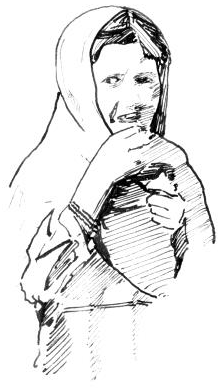
Now you can translate this well-know ټپه - Tapá:
NOTE:
The tappa is one of the oldest forms of folk poetry in the region. They often have a romantic theme, and like Japanese haiku they conform to an exact pattern of syllables, with 9 in the first line and 13 in the second.
Examples using the infinitive as a gerund (-ing)
| meena pu tla, raatlo zyaatégee. | Love increases with coming and going. | مينه په تلو، راتلو زياتيږى. |
| ílum pu lostó zda kégee. | Knowledge is learned by reading. | علم په لوستو زده کېږى. |
| kaar pu kawulo khatmégee. | Work is finished by doing. | کار په کولو ختميږى. |
| jziba pu wayúlo zda kegée. | Language is learned by speaking. | ژبه په وئيلو زده کېږى. |
| zu du marghó aawáaw aawredúlo du paara baagh ta zum. | I'm off to the park, to listen to (lit. for listening to the) bird song. | زۀ د مرغو آواز اورېدلو د پاره باغ ته ځم. |
| haghá zmaa madúd kawúlo du paara raazee. | He is coming to help (lit. for helping) me. | هغه زما مدد کولو د پاره راځى. |
| zu haspatáal ta du haghú leedúlo du paara zum. | I'm going to the hospital to see (lit. for seeing) him. | زۀ هسپتال ته د هغۀ ليدلو د پاره ځم. |
| wále pu pukhtó wayúlo shărmége? | Why are you embarrassed about speaking Pukhto? | ولې په پښتو وئيلو شرمېږې؟ |
NOTE: The infinitive is inflected in each of these examples because it is in the oblique case.
👆 What is the meaning of this sentence?
The prepositions په حق کښې - pu haq ke, په باره کښې - pu baara ke, باندې - baande meaning “about”
| staa du ilekshún pu haq ke, tsu khayaal day? | What do you think about the election? | ستا د الېکشن په حق کښې څۀ خيال دے؟ |
| dwee du pukhtano pu baara ke tsu léekee? | What are they writing about Pukhtuns? | دوی د پښتنو په باره کښې څۀ ليکى؟ |
| dwee du pukhtano pu dastóor yáne răsam aw riwaaj báande kitáab léekee. | They are writing a book about Pukhtun culture, that is, customs and traditions. | دوى د پښتنو په دستور يعنې رسم او رِواج باندې کتاب ليکى. |
Memorising moment
matalóona
Exercises for Lesson Twelve
- Fill in the blanks with the correct form of the verb listed:
- For the twelve verbs listed in this chapter, make up sentences in the present tense, in the infinitive and using the infinitive as a gerund.
Summary of verbs in the present tense
Infinitive | Present tense | ||
I | You | He, She | |
We | You (pl) | They | |
akhistul to buy اخستل | akhlúm اخلم | akhlé اخلې | akhlée اخلی |
akhlóo اخلو | akhléy اخلئ | akhlée اخلی | |
aghostul to wear اغوستل | ághondum اغوندم | ághonde اغوندې | ághondee اغوندی |
ághondoo اغوندو | ághondey اغوندئ | ághondee اغوندی | |
aawredul to hear آورېدل | áawrum آورم | áawre آورې | áawree آوری |
áawroo آورو | áawrey آورئ | áawree آوری | |
osedúl to live (reside) اوسېدل | oségum اوسېږم | osége اوسېږې | oségee اوسېږی |
oségoo اوسېږو | oségey اوسېږئ | oségee اوسېږی | |
eesaaredul to wait ایسارېدل | eesaarégum ایسارېږم | eesaarége ایسارېږې | eesaarégee ایسارېږی |
eesaarégoo ایسارېږو | eesaarégey ایسارېږئ | eesaarégee ایسارېږی | |
botlúl to take (animate) بوتلل | bozúm بوځم | bozé بوځې | bozée بوځی |
bozóo بوځو | bozéy بوځئ | bozée بوځی | |
paatsedul to get up پاڅېدل | paatsúm پاځم | paatsé پاځې | paatsée پاځی |
paatsóo پاځو | paatséy پاځئ | paatsée پاځی | |
prewatul to fall پرېوتل | pre`oozum پرېوځم | pre`ooze پرېوځې | pre`oozee پرېوځی |
pre`oozoo پرېوځو | pre`oozey پرېوځئ | pre`oozee پرېوځی | |
pohedul to understand (know) پوهېدل | pohégum پوهېږم | pohége پوهېږې | pohégee پوهېږی |
pohégoo پوهېږو | pohégey پوهېږئ | pohégee پوهېږی | |
pejzandúl to know (recognize) پېژندل | péjzanum پېژنم | péjzane پېژنې | péjzanee پېژنی |
péjzanoo پېژنو | péjzaney پېژنئ | péjzanee پېژنی | |
tlul to go تلل | zum ځم | ze ځې | zee ځی |
zoo ځو | zey ځئ | zee ځی | |
skul to drink څښل | skum څښم | ske څښې | skee څښی |
skoo څښو | skey څښئ | skee څښی | |
tsumlaastul to lie (down) څملاستل | tsumlúm څملم | tsumlé څملې | tsumlée څملی |
tsumlóo څملو | tsumléy څملئ | tsumlée څملی | |
khoRul to eat خوړل | khorúm خورم | khoré خورې | khorée خوری |
khoróo خورو | khoréy خورئ | khorée خوری | |
raatlul to come راتلل | raazúm راځم | raazé راځې | raazée راځی |
raazóo راځو | raazéy راځئ | raazée راځی | |
raawRul to bring (inanimate) راوړل | raawRúm راوړم | raawRé راوړې | raawRée راوړی |
raawRóo راوړو | raawRéy راوړئ | raawRée راوړی | |
raawustul to bring (animate) راوستل | raawulúm راولم | raawulé راولې | raawulée راولی |
raawulóo راولو | raawuléy راولئ | raawulée راولی | |
rasedul to arrive, reach رسېدل | raségum رسېږم | rasége رسېږې | raségee رسېږی |
raségoo رسېږو | raségey رسېږئ | raségee رسېږی | |
ghokhtul to want غوښتل | ghwáaRum غواړم | ghwáaRe غواړې | ghwáaRee غواړی |
ghwáaRoo غواړو | ghwáaRey غواړئ | ghwáaRee غواړی | |
kawul to do کول | kawúm کوم | kawé کوې | kawée کوی |
kawóo کوو | kawéy کوئ | kawée کوی | |
kedul to become کېدل | kégum کېږم | kége کېږې | kégee کېږی |
kégoo کېږو | kégey کېږئ | kégee کېږی | |
kenaastul to sit کښېناستل | kenúm کښېنم | kené کښېنې | kenée کښېنی |
kenóo کښېنو | kenéy کښېنئ | kenée کښېنی | |
gurzedul to walk ګرځېدل | gúrzum ګرځم | gúrze ګرځې | gúrzee ګرځی |
gúrzoo ګرځو | gúrzey ګرځئ | gúrzee ګرځی | |
ganDul to sew ګنډل | ganDúm ګنډم | ganDé ګنډې | ganDée ګنډی |
ganDóo ګنډو | ganDéy ګنډئ | ganDée ګنډی | |
larul to have لرل | larum لرم | lare لرې | laree لری |
laroo لرو | larey لرئ | laree لری | |
lostul, lawastul to read لوستل | lólum لولم | lóle لولې | lólee لولی |
lóloo لولو | lóley لولئ | lólee لولی | |
leedul to see لیدل | wéenum وینم | wéene وینې | wéenee وینی |
wéenoo وینو | wéeney وینئ | wéenee وینی | |
leekul to write لیکل | leekúm لیکم | leeké لیکې | leekée لیکی |
leekóo لیکو | leekéy لیکئ | leekée لیکی | |
nunawatul to enter ننوتل | nunaóozum ننوځم | nunaóoze ننوځې | nunaóozee ننوځی |
nunaóozoo ننوځو | nunaóozey ننوځئ | nunaóozee ننوځی | |
neewul to catch نیول | néesum نیسم | néese نیسې | néesee نیسی |
néesoo نیسو | néesey نیسئ | néesee نیسی | |
watul to go out وتل | óozum وځم | óoze وځې | óozee وځی |
óozoo وځو | óozey وځئ | óozee وځی | |
oRul to take (inanimate) وړل | oRúm وړم | oRé وړې | oRée وړی |
oRóo وړو | oRéy وړئ | oRée وړی | |
oodredul to stop اودرېدل | oodrégum اودرېږم | oodrége اودرېږې | oodrégee اودرېږی |
oodrégoo اودرېږو | oodrégey اودرېږئ | oodrégee اودرېږی | |
wahul to hit وهل | wahúm وهم | wahé وهې | wahée وهی |
wahóo وهو | wahéy وهئ | wahée وهی | |
weenzul to wash وینځل | wéenzum وینځم | wéenze وینځې | wéenzee وینځی |
wéenzoo وینځو | wéenzey وینځئ | wéenzee وینځی | |
👆 To practice these verbs, have your helper make a simple sentence using vocabulary you already know. Then have him or her give you a pronoun. Now make a sentence using the new pronoun. Fluency will improve if you resist the temptation to use English. As you get better, go faster.
For example:
| zu laas wéenzum. | زه لاس وینځم. |
| moong | مونږ |
| moong laas wéenzoo. | مونږ لاس وینځو. |